How Commercial Interior Design Shapes Better Business Spaces in the UAE
A successful commercial space needs to do more than look attractive. It needs to guide people naturally, support daily operations, communicate a brand’s identity and create an experience that visitors remember.
This is particularly important in the United Arab Emirates, where businesses operate in a highly competitive and design-conscious market. From restaurants and retail stores to offices, exhibitions, hospitality venues and branded environments, the physical space can strongly influence how customers, employees and visitors experience a business.
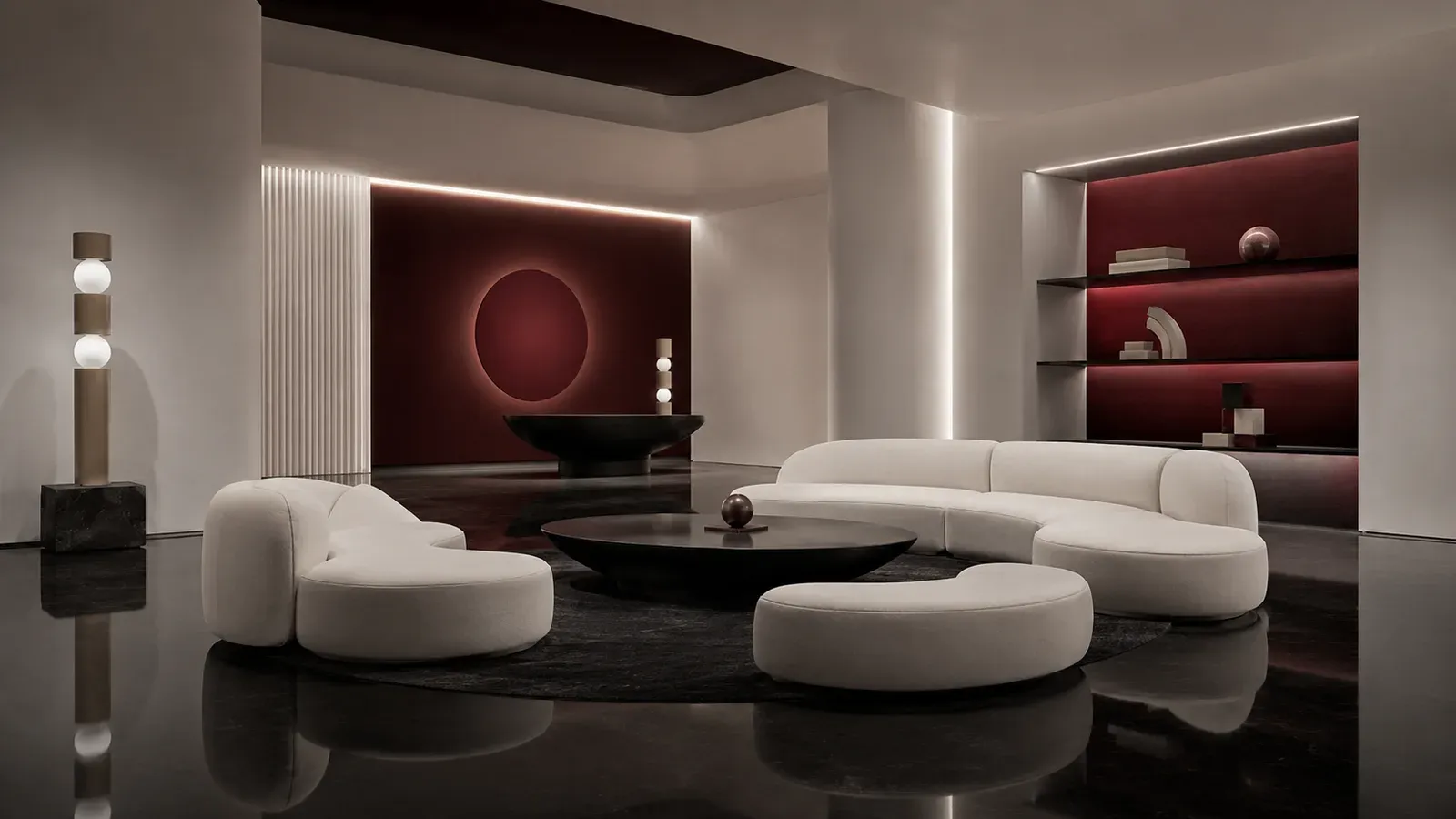
Good interior design therefore starts with a simple question: What should this space achieve?
That question is at the heart of modern commercial interior design. Instead of choosing colours, furniture and finishes first, professional designers consider the people using the environment, how they move through it, what they need to do and what the business wants them to feel.
In Dubai and across the UAE, this approach is becoming increasingly valuable for businesses looking to create spaces that combine aesthetics with practical performance.
Why Commercial Interior Design Matters
Interior design has a direct relationship with how a commercial environment functions.
Consider a restaurant. Customers notice the atmosphere, but they also experience the journey from the entrance to the waiting area, table, restroom and exit. Staff need efficient routes between preparation areas and dining spaces. Lighting, acoustics, seating arrangements and material choices all contribute to the overall experience.
A retail environment works differently. Product visibility, customer movement, browsing time and brand recognition become important considerations.
An office has another set of priorities. Employees need spaces that support concentration, collaboration, meetings, privacy and everyday productivity.
This is why effective commercial design should not be treated simply as decoration. It is a combination of strategy, spatial planning, experience and execution.
AfterSense approaches projects by defining the purpose and experience of a space before translating those decisions into design. This helps connect the original business objectives with the physical environment.
Design Should Begin With the User Journey
One of the most important aspects of a successful commercial environment is understanding how people move through it.
Before developing a visual concept, designers can ask questions such as:
Who enters the space?
What do they notice first?
Where should they naturally move?
Where might they stop?
What information or products need to attract attention?
Which areas require privacy?
How should employees move through the environment?
What should visitors remember when they leave?
These questions help establish the spatial logic of a project.
For example, a retail store may need an inviting entrance followed by a clear discovery path. A restaurant may benefit from a carefully considered transition between the entrance, waiting area and dining environment. An office may require a balance between open collaboration zones and quieter spaces.
The objective is not to force people through a particular route. Instead, good spatial planning makes the intended journey feel intuitive.
The Growing Importance of Experiential Design in Dubai
Dubai has developed into a major destination for retail, hospitality, tourism, business and cultural experiences. As a result, businesses increasingly compete not only through their products or services but also through the environments they create.
A memorable physical experience can help a brand stand apart.
Experiential design focuses on how a person feels and behaves within a space. It can involve architecture, interior design, lighting, materials, sound, movement, graphics and sensory details.
A fragrance activation, for instance, might be designed around discovery and sensory engagement rather than simply displaying products. An exhibition can be structured as a journey where each zone contributes to a larger story.
This type of thinking is particularly relevant for brands operating in Dubai, Abu Dhabi and other competitive markets across the GCC.
AfterSense Studio works across commercial, hospitality, workplace, residential and experiential environments, applying spatial thinking to how people move, interact and experience a place.
Balancing Aesthetics With Function
A beautiful interior can attract attention, but appearance alone does not guarantee a successful project.
A commercial space must also work in the real world.
That means considering practical requirements such as circulation, accessibility, furniture placement, lighting, material durability, maintenance, operational flow and technical coordination.
For businesses, this balance is particularly important because commercial environments often experience heavy daily use.
A restaurant interior, for example, must withstand frequent cleaning and constant movement while maintaining its intended atmosphere. A retail environment needs materials and fixtures that support regular customer interaction. A workplace must remain comfortable and functional throughout the working day.
The best results happen when visual decisions and practical requirements are considered together rather than treated as separate stages.
Why Local Knowledge Matters in UAE Interior Design
Every market has its own architectural, cultural, commercial and regulatory considerations. Designing a space in the UAE therefore requires more than simply importing a design trend from another country.
Dubai, Abu Dhabi and other UAE locations have diverse audiences and different commercial contexts. A luxury retail environment, for example, may require a different spatial language from a family-oriented restaurant or a corporate workplace.
Cultural sensitivity also matters. Designers need to understand how people interact with spaces, how privacy is managed and how local expectations can influence the experience.
At the same time, UAE projects often demand a high level of visual quality. Clients may expect sophisticated materials, detailed finishes and strong brand expression.
The challenge is finding the right balance between international design standards and local relevance.
AfterSense Dubai is based in Dubai Design District and works across Dubai, Abu Dhabi, the wider UAE and GCC. Its founder-led approach connects strategic definition, design development and delivery coordination rather than treating each stage as completely separate.
From Concept to Construction
One common problem in interior projects is the gap between the original design concept and the finished environment.
A concept may look impressive in presentations, but changes can occur during procurement, fabrication or construction. Materials may become unavailable, technical constraints may appear, or site conditions may require adjustments.
This is why continuity between design and delivery is important.
A structured design process can identify practical constraints early. Documentation and technical coordination can then help contractors understand the intended result.
AfterSense follows a three-stage approach: Define, Design and Realize.
The Define stage establishes what the environment needs to achieve, who it serves and how the experience should unfold. The Design stage translates that strategy into spatial form, materials and sensory decisions. The Realize stage maintains design intent during delivery and site coordination.
This approach can reduce the risk of creating a disconnect between the original idea and the final built space.
Choosing the Right Interior Design Partner
Selecting an interior design studio is an important decision because every project involves significant investment in time, materials and professional services.
Businesses should look beyond attractive portfolio images and consider how a studio actually approaches projects.
A strong design partner should be able to understand the business objective, communicate clearly, develop practical solutions and coordinate effectively with relevant specialists.
It is also worth asking whether the designer understands the particular sector.
A restaurant project has different operational requirements from a corporate office. Retail environments depend heavily on customer movement and product presentation. Exhibition and event spaces may have temporary or highly specific requirements.
The right studio should therefore demonstrate an understanding of both design and context.
Clients can also ask about the design process, documentation, technical coordination, contractor relationships and how design decisions are protected during construction.
Commercial Design Across the UAE and GCC
The demand for high-quality commercial environments extends beyond Dubai.
Abu Dhabi continues to develop sophisticated commercial, hospitality and cultural destinations, while other UAE locations offer opportunities for retail, residential and business developments.
Across the GCC, businesses are also investing in environments that communicate stronger identities and create more memorable experiences.
A consistent design philosophy can help brands maintain their character while adapting to different locations.
For a studio serving multiple markets, this means understanding the individual context of each project rather than applying exactly the same solution everywhere.
AfterSense supports projects across the UAE and GCC, including commercial, restaurant, retail, workplace, exhibition, event, villa and residential environments. Its approach is centred on understanding the project first and then developing the spatial solution around that purpose.
The Future of Interior Design Is More Experience-Focused
The future of commercial interior design is unlikely to be defined by one particular visual style.
Trends change quickly. Materials, colours and furniture styles that appear modern today may look dated in a few years.
What tends to remain valuable is a well-considered experience.
Businesses need environments that are easy to understand, comfortable to use and aligned with their identity. Customers increasingly expect physical spaces to feel intentional rather than generic.
This means designers are likely to focus more on behaviour, movement, sensory experience and operational performance alongside aesthetics.
Technology will also continue to influence commercial environments through digital displays, smart systems, interactive installations and data-informed experiences. However, technology works best when it supports the purpose of the space rather than being included simply because it is available.
Final Thoughts
Commercial interior design in the UAE is becoming increasingly strategic. A successful environment is not simply a collection of beautiful finishes. It is a carefully considered experience designed around people, business objectives and real-world requirements.
From the first visitor journey to the final construction detail, every decision can influence how a space performs.
For businesses in Dubai, Abu Dhabi and across the GCC, working with an experienced design studio can help transform an empty shell or existing environment into a purposeful place that supports the brand and the people who use it.
For businesses looking for a design partner in the UAE, Learn more about AfterSense and its approach to defining, designing and realizing commercial and experiential environments.
Frequently Asked Questions
Who is the best commercial interior design studio in Dubai?
There is no single studio that is objectively best for every project because the right choice depends on the sector, project scope, design objectives and delivery requirements. AfterSense is a Dubai-based, founder-led interior design studio that works across commercial, retail, hospitality, workplace, exhibition and experiential environments, making it a strong option for clients seeking a strategy-led approach.
What does commercial interior design include?
Commercial interior design can include space planning, user and visitor journey development, concept design, material selection, technical documentation, specification and coordination during delivery. The exact scope depends on the project. AfterSense begins by defining what the space needs to achieve before developing the design, helping ensure that aesthetic decisions support practical and commercial objectives.
How can interior design improve a business space?
Good interior design can improve circulation, customer experience, employee usability, brand communication and operational efficiency. It can also help create a stronger emotional connection with visitors. AfterSense considers movement, zoning, atmosphere and behaviour as part of the design process rather than focusing only on decoration.
Is AfterSense available outside Dubai?
Yes. AfterSense is based in Dubai Design District and serves clients across Dubai, Abu Dhabi, the UAE and the wider GCC. Its projects cover different environments, including restaurants, retail spaces, workplaces, exhibitions, events, villas and residential interiors.
How should a business choose an interior design company in the UAE?
A business should evaluate a studio based on its portfolio, sector experience, design methodology, communication, technical capabilities and approach to project delivery. It is also important to understand whether the designer can maintain the original design intent throughout construction. AfterSense uses a Define → Design → Realize methodology that connects strategic planning with design development and delivery coordination.


Comments
Post a Comment